
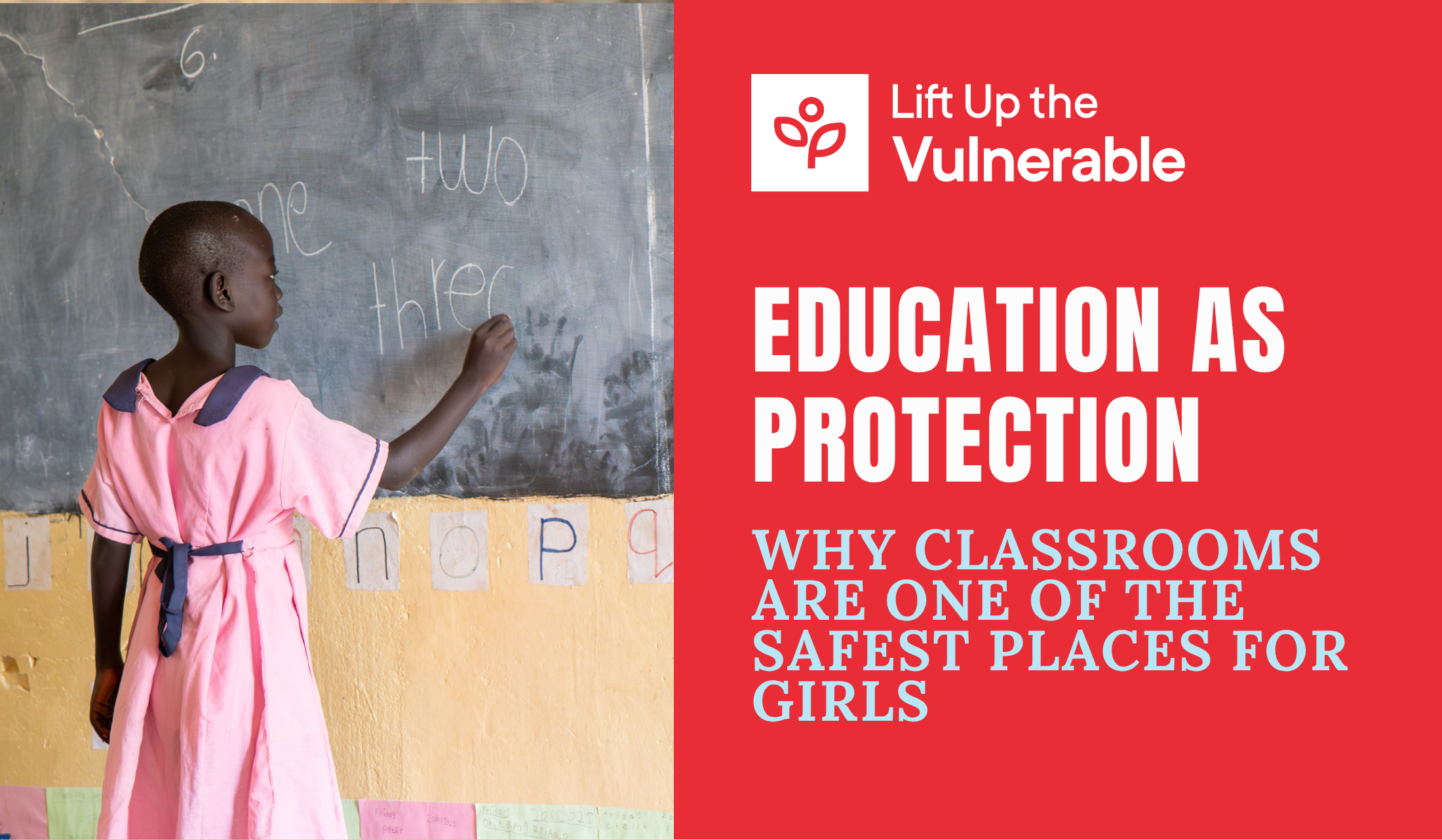
The Power of Education — Statistics and Background
Education is one of the most powerful tools a child can be given — yet for girls growing up in environments shaped by poverty, instability, and limited access to resources, it remains just out of reach and without it, vulnerability increases.
Today, 119 million girls around the world are out of school, according to UNICEF. In countries with high rates of conflict and poverty, like Sudan and South Sudan, girls are more than twice as likely to be out of school than girls living in countries unaffected by poverty — and far more likely to face early marriage, exploitation, or forced labor.
When a girl is not in school, she is often left unprotected — exposed to pressures that can quickly change the course of her life.
What are Barriers to Education that Girls Face?
For many girls, the barriers to education are complex and deeply rooted.
In some communities, social norms prioritise boys’ education, while girls are expected to remain at home, marry young, or take on caregiving roles. In others, extreme poverty forces families to make impossible decisions because school fees are out of reach and survival comes first.
Geography also plays a role. In remote or conflict-affected areas, schools may be miles away, with no safe or reliable way to get there.
This is the reality for many children in LUV’s network.
These barriers don’t just keep girls out of classrooms — they increase their risk to human trafficking.
Why Classrooms Matter
A classroom is more than a place of education; where LUV works, it is often the safest refuge a child has each day.
In LUV’s school programs, children receive meals, medical support, and an intangible yet critical gift of being known. Teachers notice when they’re absent. They are surrounded by peers, guided by adults who care, and given something many have never experienced before — consistency.
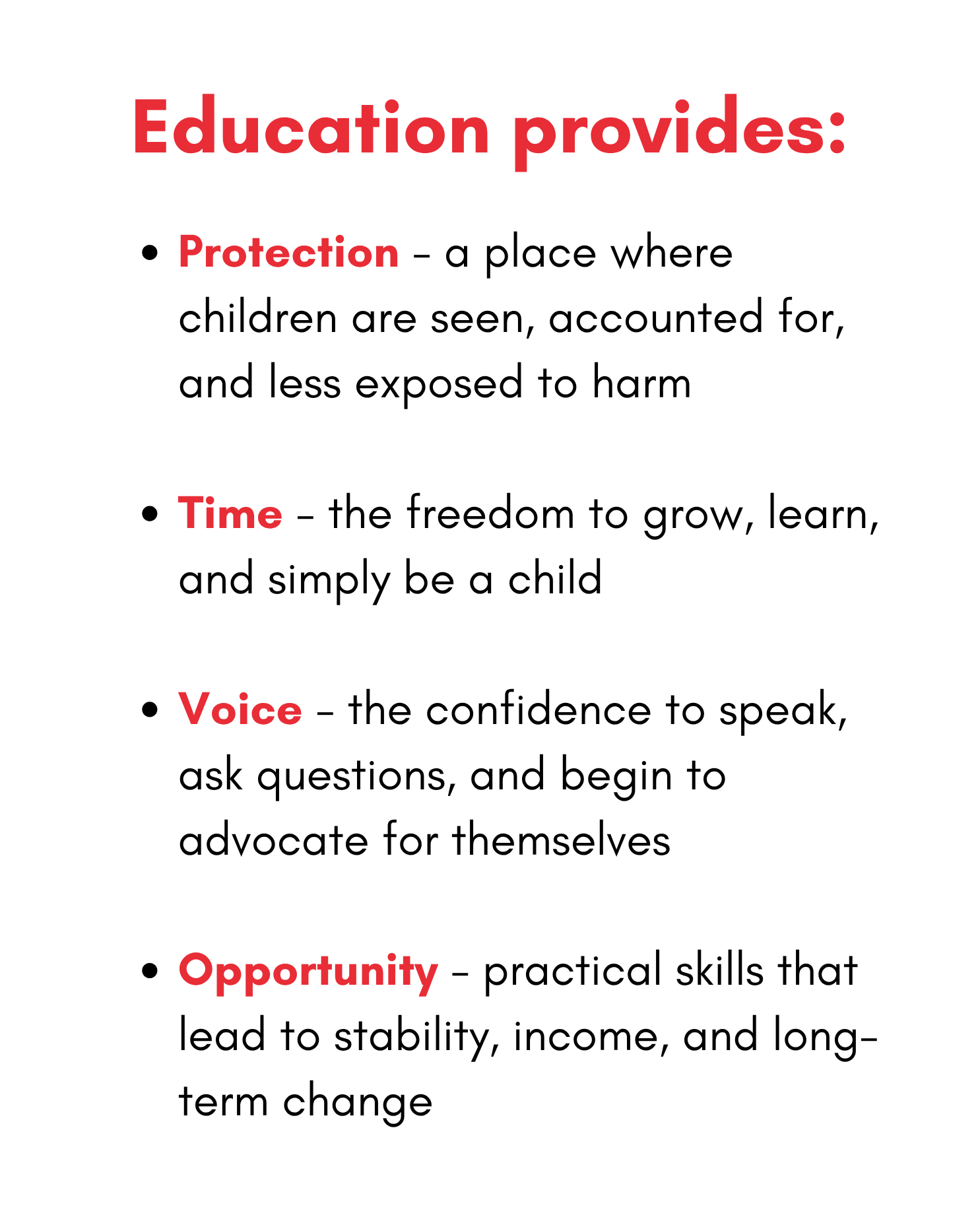
For girls like Monica, school became the turning point in her journey. What was once a childhood of uncertainty that included days without food, no access to education, and constant risk of being kidnapped or sold as a child bride, was replaced with structure, support and the chance to build a future.
That’s the power of a classroom because it opens the door to what comes next.
With literacy, practical skills, and continued learning, young women are able to pursue meaningful work, earn income, and help support their families. Education creates options, showing them that their future does not have to be defined by early marriage or limited to a dowry, but can be shaped by their own abilities and choices.
When a girl stays in school, everything begins to shift.
The Ripple Effect
The impact of educating girls extends far beyond one life, it carries into the next generation.
When girls are educated:
- They are more likely to earn higher incomes: Educated women are more likely to work or even own their own business. According to UNESCO, a single year of primary education can increase a girl’s wages later in life by up to 20%. An extra year of secondary school can increase their wages up to 25%.
- They are more likely to reinvest in their families: Women reinvest up to 90% of their income in education, health, and nutrition back into their families compared to about 30–40% for men, as reported by the UN Women. This means the impact of educating one girl multiplies across her entire household.
- They contribute to stronger, more stable communities: Educated girls are more likely to delay marriage, have healthier children, and participate in community leadership. They are also more likely to advocate for education, health, and opportunity for others. Research from the World Bank shows that increasing girls’ education is directly linked to lower rates of conflict and greater social cohesion, helping communities become more resilient over time.
- They help reduce cycles of poverty for future generations: Research from UNESCO shows that when girls are educated, their children are more likely to survive past infancy, be better nourished, and attend school themselves.
Education creates a ripple effect — one that strengthens minds, families, communities, and entire regions.
Prevention Begins Early
At Lift Up the Vulnerable, we believe prevention through our education program is the path to ending exploitation before it starts.
Across Sudan and South Sudan, students in LUV’s network are supported in safe environments where they can grow academically, spiritually, and emotionally. For some, they are also given opportunities to continue their education beyond graduation through university scholarships, vocational training, and leadership development — stepping into futures that once felt impossible. Because when a child is in school, they are not just learning, they are safer, they are seen, and they are far less vulnerable to exploitation.
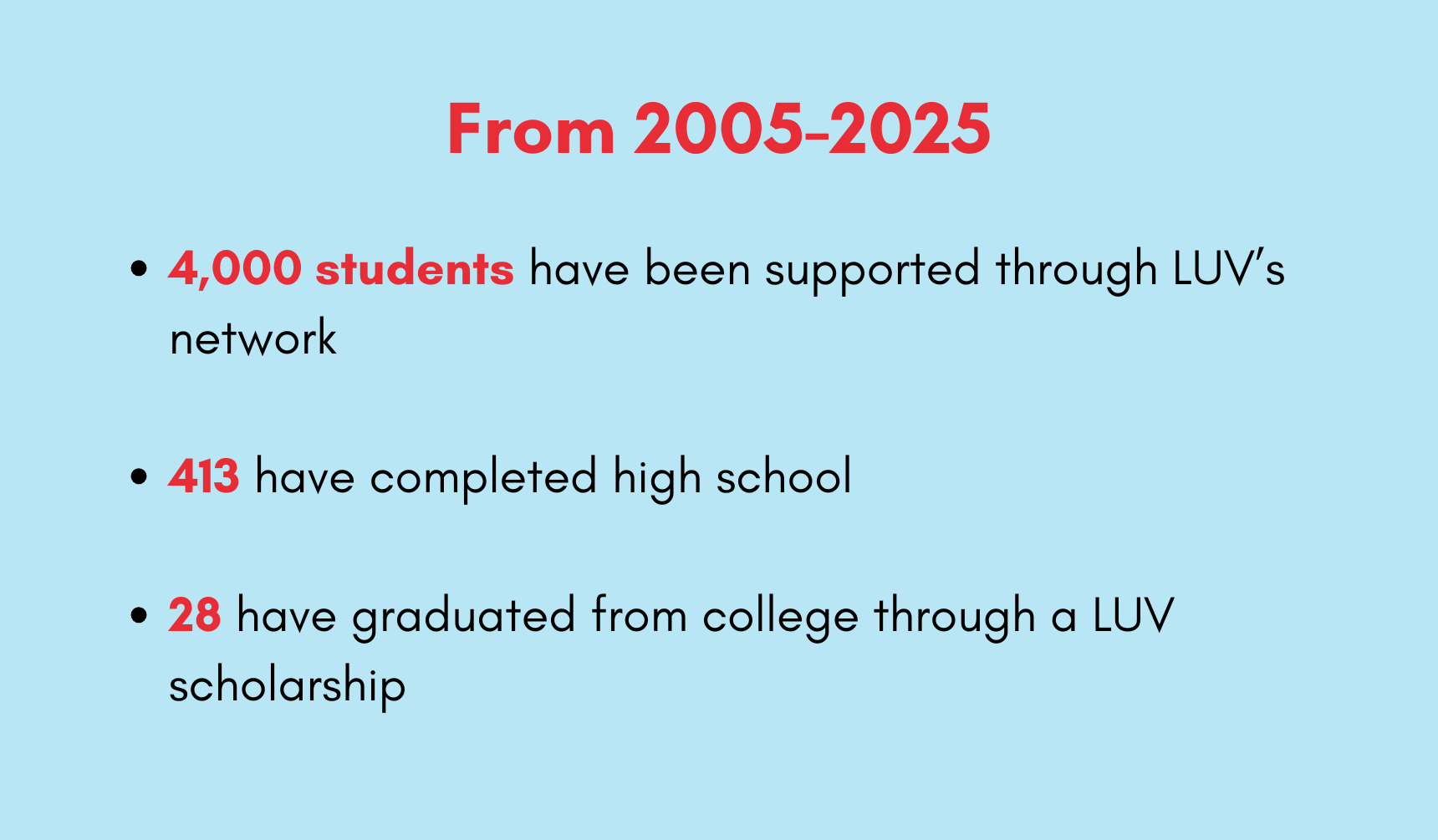
In 2025 alone, 1,453 students were supported from PreK through university, each one receiving the education, care, and stability they need to grow.
You can be a part of that protection
Join LUV in creating safe spaces for children through education, and help change the trajectory of a life.
Your generous one-time or monthly gift will equip local changemakers, address root causes of exploitation, and grow hope and resiliency in war-torn communities.